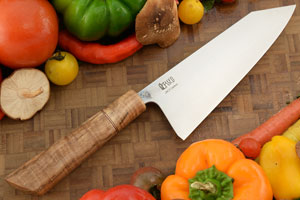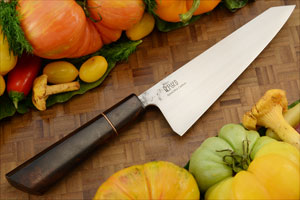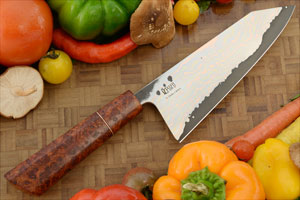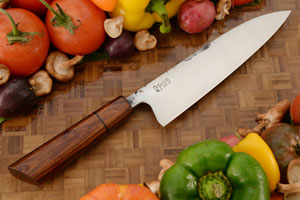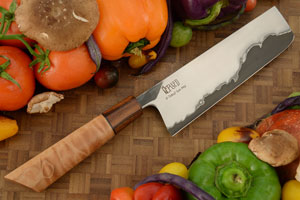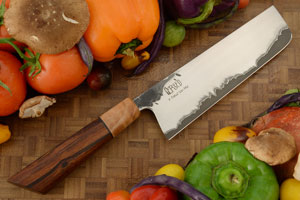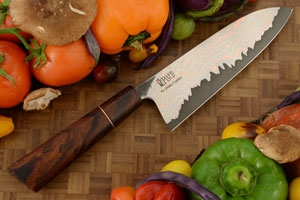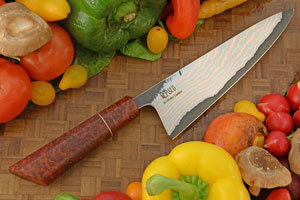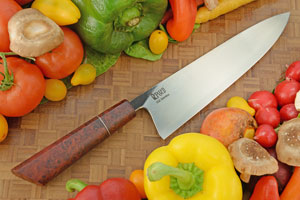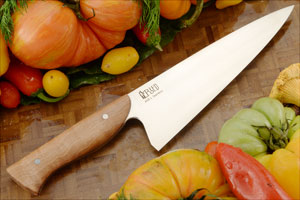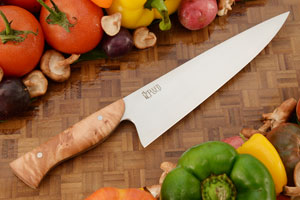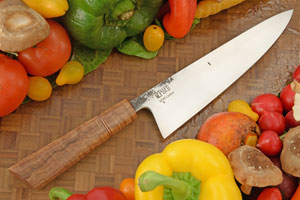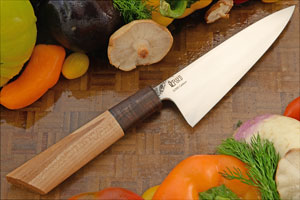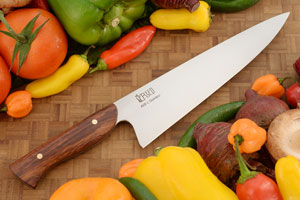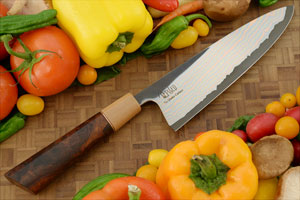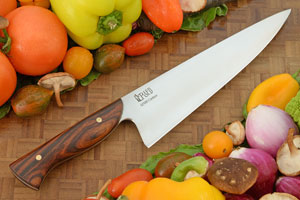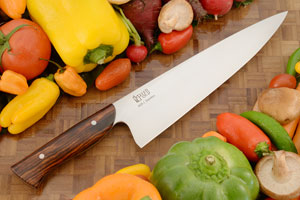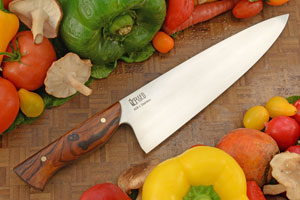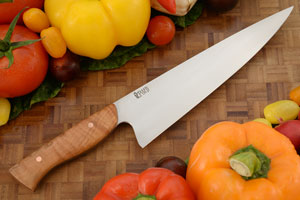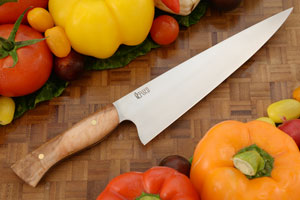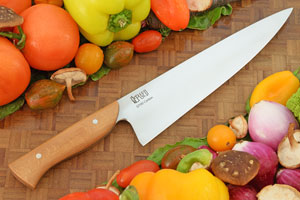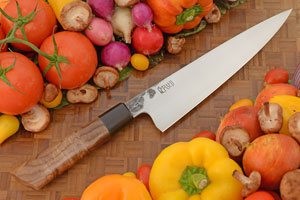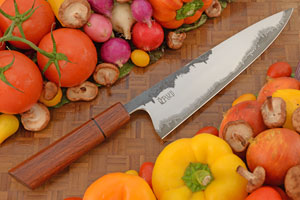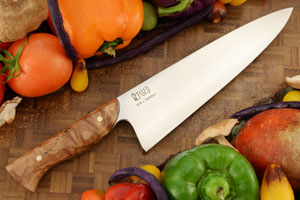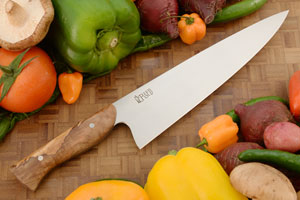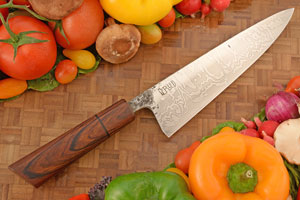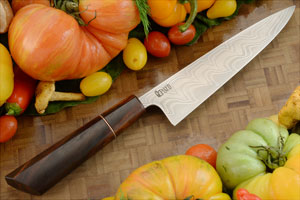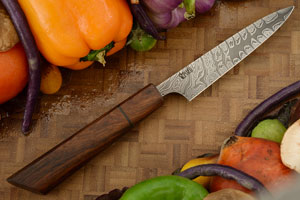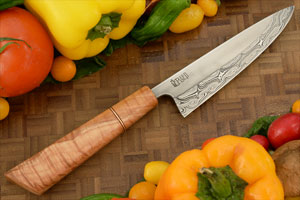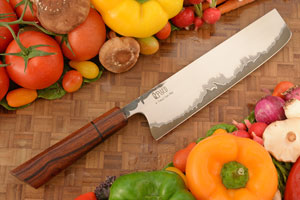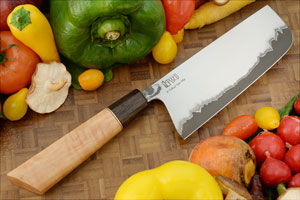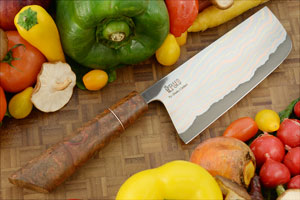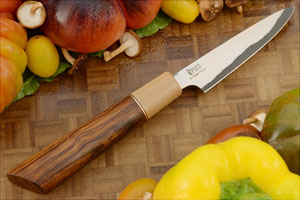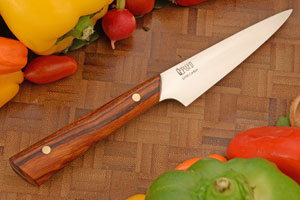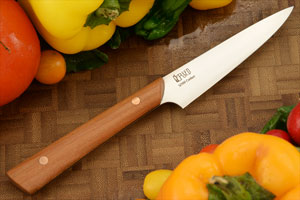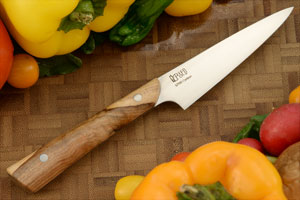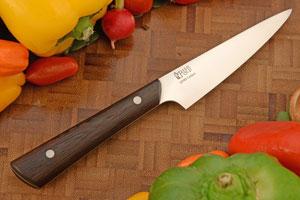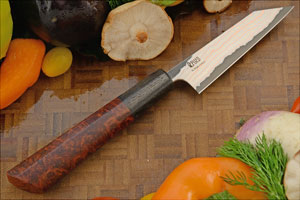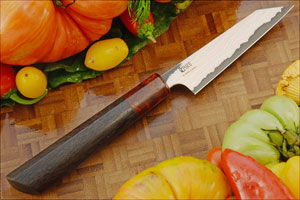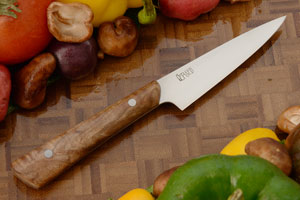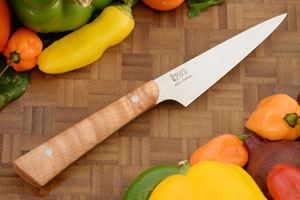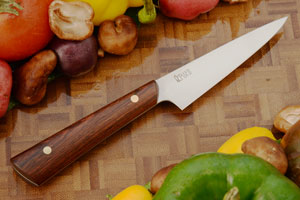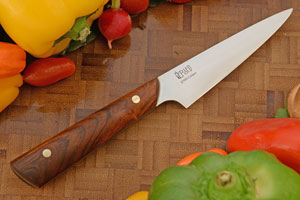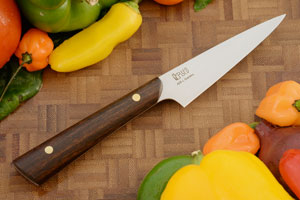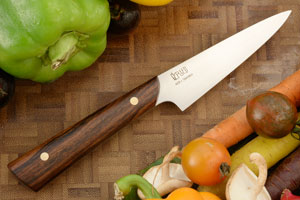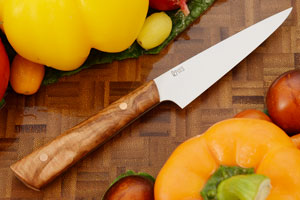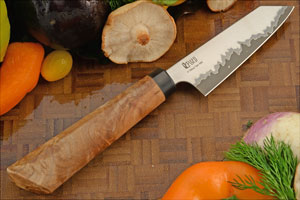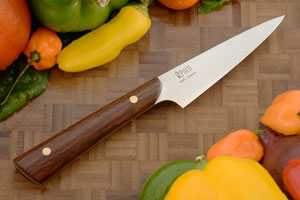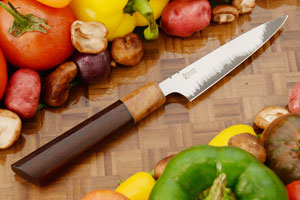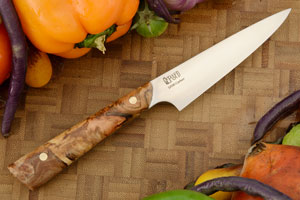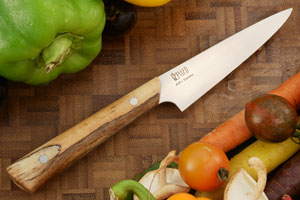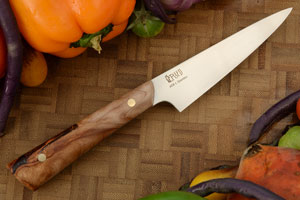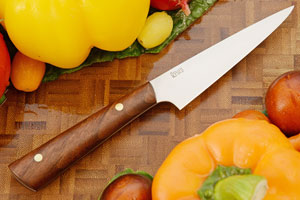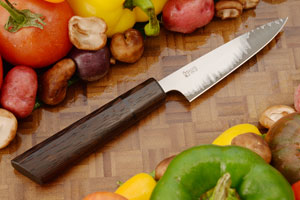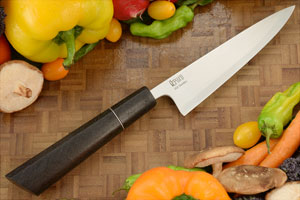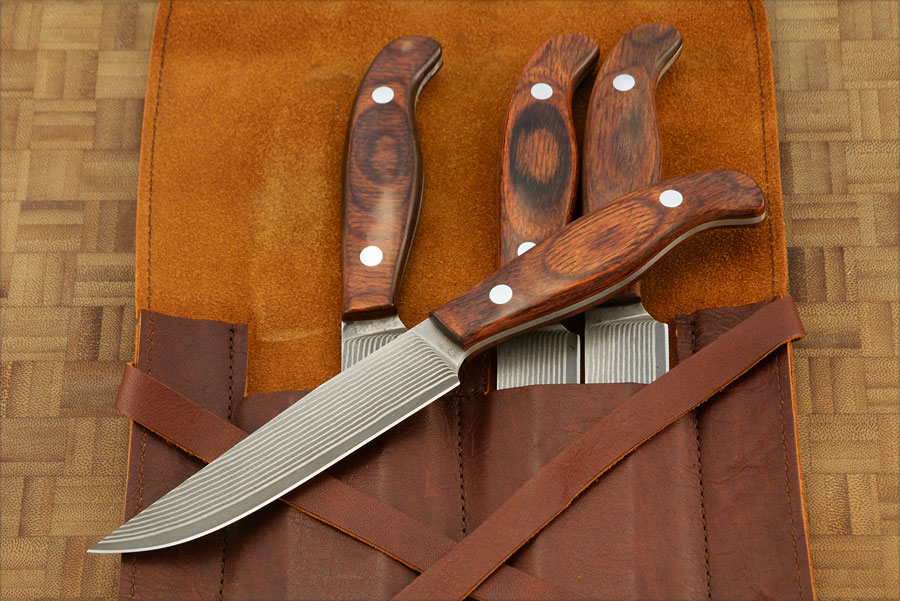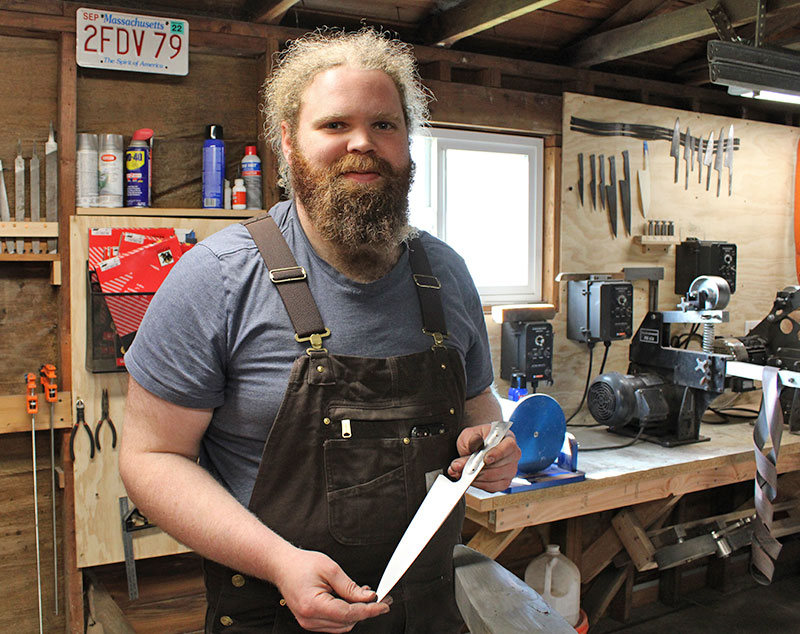
Washingtonian State native Sam Reed (b. 1991) is one of our favorite culinary knife craftsmen. His knives are created with the passionate chef in mind, whether working in a professional kitchen or creating meals at home for family and friends. His knives are meant to be well used, to last, and to be tied to memories of hearth and home for generations.
When we are asked to recommend a custom chef’s knife, Reed’s knives are usually in the conversation. His knives feel both substantial and nimble in your hand. Inspired by Japanese blade geometry, Reed's knives excel at slicing and chopping. Looking for superior edge retention and ease of sharpening, Sam gleaned heat treatment techniques from Mastersmith Bill Burke. As a result, Sam's knives provide a superior, long lasting cutting edge. Fantastic handle ergonomics such as Japanese-inspired half rounds and streamlined western handles allow for fatigue-free use hour after hour. Reed’s culinary knives are at the very pinnacle of performance. Very few knifemakers manage to capture the true essence of what makes a culinary knife a successful tool. Sam uses both forging and stock removal techniques for his knives.
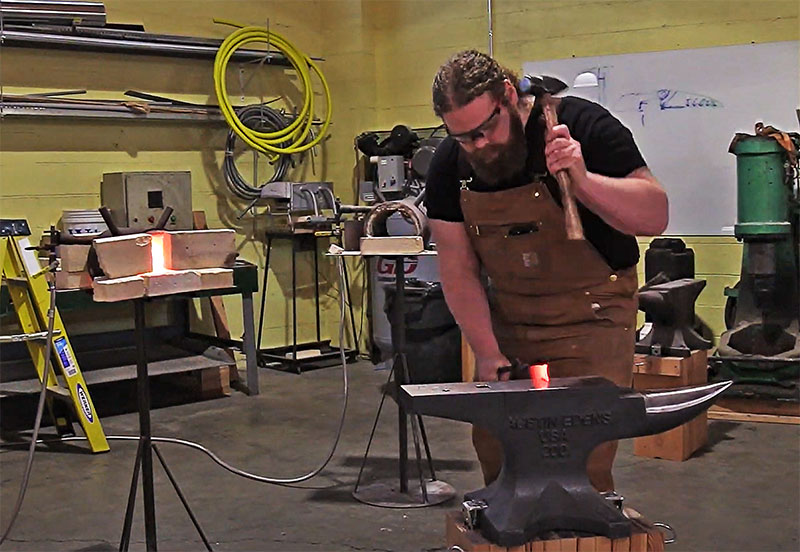
Reed was introduced to swinging a hammer at metal at 14 when his dad, a veterinarian, brought him to a blacksmith class at Jerry Culberson’s Old Cedar Forge in Allyn, WA. Sam’s dad had to sweet talk Jerry into letting the teen into a class full of adults. Confident in the knowledge gained in that forging class, 14-year-old Sam soon forged his first knife from a Honda coil spring. Though his first knife had humble beginnings, the joy of creating had hooked him. After acquiring a copy of Wayne Goddard’s $50.00 Knife Shop, Sam began to make outdoor-focused knives. These knives complemented his love of camping, foraging, hiking, and his time as an evolutionary biologist working at the UW Ecology Department. In time, he began falling in love with Japanese kitchen knives. Sam’s desire to learn led him to search for mentors. He credits David Tuthill of Fire Horse Forge as his biggest influence – especially with Wa handles, damascus, and integral bolsters. Reed also gives credit to Epicurean Edge founder Daniel O'Malley for the refinement of his culinary blades and handle geometry. He credits Mastersmith Bill Burke for sharing the science behind tempering and materials knowledge.
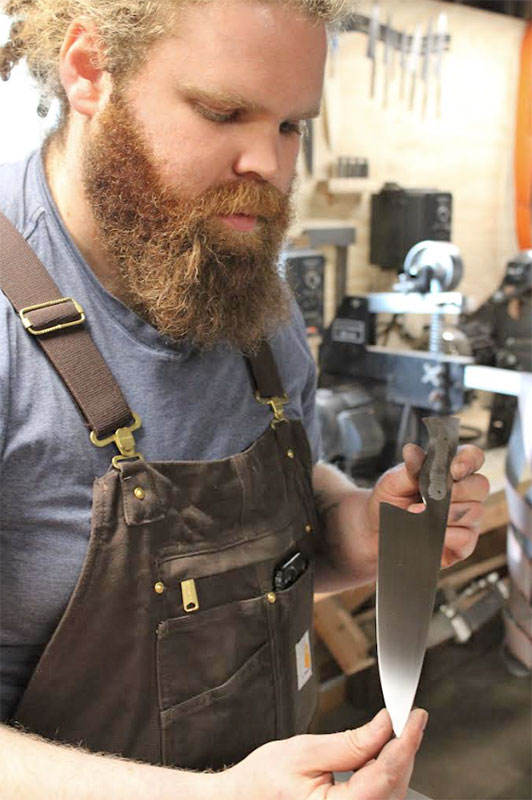
Sam is a deeply philosophical maker and craftsman. He strives to honor the lineage that bladesmithing passes down from teacher to student. He has learned from David Tuthill, who learned techniques from Mastersmith David Lisch, who in turn credits Mastersmiths Larry Fuegen and Tim Hancock as his influences. Reed feels their presence in every knife he designs and creates. This passing forward of knowledge has helped him to find his unique style while creating knives that will perform at the very highest standards. He feels that bladesmithing is one of the few crafts that pays homage to a skill best learned in person. Sam passionately believes that creating in the forge while working beside a mentor creates a solid foundation for the student to develop their unique style. His culinary knives are meant to be worked hard, sharpened, reshaped, resharpened and the process repeated. He intends for his full-sized chef’s knives to be retired as beloved petty knives decades later.
Sam Reed actively supports the vibrant Pacific Northwest knifemaking community while instructing at Pratt Fine Arts Center in Seattle. There, he passes on the many lessons that he has been taught by so many teachers over the years. He has trained with Mastersmith David Lisch, learned how to create damascus from David Tuthill, and honed his sharpening abilities by spending long hours alongside Daniel O’Malley. Reed primarily works in his Seattle forge which is centered around his prized 200lb Peter Wright anvil. His crafting of Japanese-inspired culinary knives blends traditional design with unique Northwest aesthetics and materials. These durable and elegant tools are found on the cutting boards in home kitchens as well as in the hands of professional chefs working twelve hour shifts. His knives are a statement to the enduring longevity and beauty of traditional, handcrafted culinary tools.